
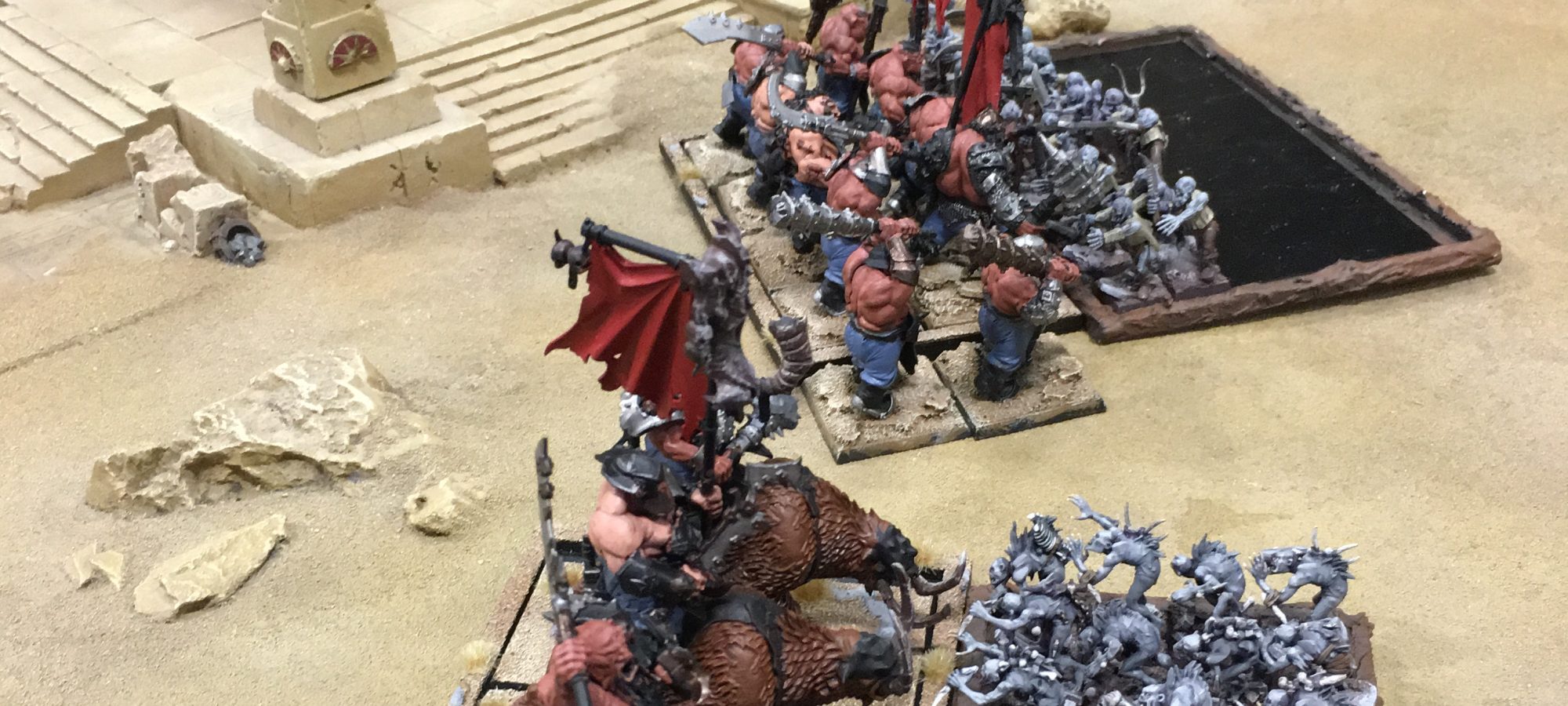

Ok, having looked back over this blog it’s quite the ramble. I want to go into Season 3 with something a bit different on two front. The first is a step by step guide on how I paint 28mm miniatures. From opening the blister to calling it done. The second difference is that for only the second time I’ll be painting a non GW 28mm miniature. The first time? Read about that here (I was having a hard life at the time and not really able to blog so actually that’s no detail, just a picture).
Who are Morgue Miniatures?
I found this really cool mini producer on Twitter called Morgue Miniatures. they sell their minis through Etsy: https://www.etsy.com/shop/MorgueMiniatures and they’re really good value for some very fun looking figs. Mine only took a week or so to arrive via international post so the service was on point too.
The range isn’t big but I decided on Catrina, Hidalgo and the Ghast. There’s loads of details on the models and I think they’d look really good as character models in an Undead army, for example. The minis are one piece pewter which some people care about (I don’t). It means I don’t have to glue them together or fill gaps.
The only fault I could find with anything is that the Ghast doesn’t fit into his slotta base but I don’t like slotta bases anyway so I may end up cutting the bar off and fixing him to a solid base.
Step One – everybody gets a bath. Twice.
Righto, here’s the first step. How I paint 28mm miniatures for display starts here and it couldn’t get any simpler. Miniatures straight out of the blister are pretty grubby things. They’ve been handled, they’ve usually been covered in a gel that helps release them from the mould, they’re dusty etc, etc.
All of that ‘stuff,’ needs to come off. Otherwise that’s the layer that any paint will be covering and it will be more prone to chipping, or it just won’t stick. Whatever the the material the mini is made of, everyone gets a bath in warm water with dishwashing soap. After a few minutes I give them a scrub with an old toothbrush, rinse them in clean water, change the soapy water and repeat the process.
It doesn’t take very long and if you’re going for a decent finish then it starts here so two baths it is. Here’s the outcome:


Step 2 – An undercoat
We’re probably all aware of this step but I will give it some air time because I’ve learned a lot about this stage over time:
- This step is meant to give a ‘key,’ for the subsequent layers of paint to stick to. That’s it. It doesn’t have to be fancy. It just needs to cover all of the mini and go on smoothly. It’s a bit like a golf tournament – you can’t win it on day one but you can lose it. This step isn’t hard but if you don’t get it right then you won’t end up with a good finish.
- I didn’t have to build these models but when you build and gap fill multi part models, this is the stage at which all the imperfections will appear. Same with mould lines. I used to swear and curse when I undercoated and it showed up mould lines I’d missed. Now I’m more zen about it and I use the undercoat stage specifically TO show up any flaws. If you find any just correct them and just put on another coat. These minis were flawless. No mould lines, no bubbles or voids.
- The colour doesn’t matter. Most people spray undercoat their models black and that’s fine. For army painting I’m down with that because it helps generate very dark shadow areas which can hide speed painting marks. When I paint 28mm miniatures for display there’s a zenithal stage that comes after undercoating so colour is irrelevant. I have a can of ‘The Fang,’ from Citadel laying around so I used that.
- Do two thin coats. I’ve used spray cans and I’ve used an airbrush (I’m currently ‘between airbrushes,’ so used a spray can here). The principle is broadly the same. One thin coat from 30 (ish) centimetres, give it time to dry and then a second coat. I always keep the model and the paint source moving so no single area gets too heavy a coat. In years past I have genuinely obscured details on models by undercoating too heavily. Don’t be that guy. Also, if coat one has shown up flaws which you’ve corrected, then coat two becomes your new coat one so do three coats in total.

Steps 3, 4, 5, 6 are how I zenithal highlight 28mm for display painting.
Zenithal highlighting is the process of using a small number of colours (usually three) covering a wide light / dark range to sketch in the dark and highlight areas on a miniature. Typically (and this is true for me) this is done with black, grey and white so the result looks like a monochrome paint job. However, you can use any limited number of colours as long as you have a dark, a mid and a light tone and they are all very distinct. Zenithal highlighting does a few different things in terms of successful display painting:
- Draws out the detail which can be difficult to see when a model is undercoated in one colour.
- Gives a value sketch so that thin layers of paint retain some of the light / dark paint beneath giving depth to the painting. This is key to how I paint 28mm miniatures
- Leaves a mid tone overall that acrylic paint, generally, covers better than black (for example).
Now, one of my painting idols, Richard Gray, loves a black undercoat and no zenithal so it’s definitely not the case that you can’t create heart breaking works of staggering genius with a black undercoat but…If your standard operating procedure to paint 28mm miniatures is to undercoat with, say, Chaos Black from Citadel and you have problems with painting flesh, yellow or red then give a zenithal highlight stage a go. All of those colours (and many more) don’t cover black very well. Don’t make life hard for yourself. Invest time at this stage and you’ll save time later. Trying to cover black undercoat with red, for example, just means several more coats of the red than you’d need over zenithal. That either i) at best takes more time or ii) at worst will tempt you into using thicker paint than you should and that’s the quick road to frustration.
A quick note on airbrush vs brush painting for zenithal highlighting
If you’re painting a squad, or an army, this is quicker with an airbrush, no doubt. But not much quicker. For single figures there’s no real difference. When I paint 28mm miniatures for display, I prefer to use a brush for the zenithal stage. It just kind of helps to dial my brain into the miniature and helps crystallise schemes etc.
Step 3 & 4, the mid tone and highlight
Pretty simple stuff this. Step three is take your mid tone (ie. the colour of your three which isn’t your extreme shadow or extreme highlight), thin it down so it flows nicely and paint it all over the miniature. Wait for it to dry fully then do it again. I didn’t photograph this stage because it doesn’t really need it. At this stage, however, I now have three miniatures painted grey (a simple 1:1 mix of Vallejo black and white).
Step four is to take your highlight colour and give the miniature a moderately heavy dry brush with it all over. Again, pretty simple stuff. The only hard bit so far is making sure each stage is dry before you do the next one. Here’s what you end up with:

Step 5 – the shadows
You were waiting for this to get difficult right? Wrong. Now techniques differ for this next bit. If you have an airbrush you can shoot your shadow colour from underneath the mini. If I’m brush painting (as I prefer to do for display single figures) then I wash the mini with my shadow colour. That’s it.
My midtone was grey, my highlight was white, my dark tone is a black brown; good old Agrax Earthshade from Citadel. As long as you thin it down to a wash consistency you can use a paint as your dark tone, it doesn’t matter. I just like Agrax because it’s got some colour to it (the brown) and it’s already a wash so I don’t have to alter it.
The only hard part here is making sure the wash doesn’t pool in the recesses. These Morgue Miniatures are quite small and very detailed so there’s a risk there but, again, just take your time and be careful and you’ll be fine. After step 5 Hidalgo was looking pretty dandy…

Step 6 – the bonus round
No one is going to get mad if you leave your zenithal highlighting at step 5. Actually, what step 5 does teach you is the value of applying washes AFTER you’ve done any drybrush highlights. If you’re an army painter and you currently wash and drybrush then you may find that your drybrush highlights look a bit chalky or stark. Trying doing your washes after your drybrush rather than first. It smooths the drybrush out and removes the chalkiness. Have another look at Hidalgo above, no chalkiness or harshness from the drybrush at all – perfect for army painting.
The issue at the zenithal stage, however, is that those extreme highlights are an important part of the value sketch and they will inform a lot of the layers of thin paint on top so step 6 is to go back in with the highlight colour with a much more focused and light touch. Dry brush only the most exposed highlights and with a much lighter brush stroke than from stage 4. You’re just trying to pull the highest highlights back out here, not reintroduce the chalkiness. Here’s Catrina at the three key stages of prep: After her baths, after her undercoat and after her full zenithal highlighting:


Notice how much more detail is obvious in the zenithal state than the undercoat state. Seeing all of the detail makes planning the base coats much easier and also makes it much harder to miss painting some of the detail. Now I can layer thin paint over the top, the value sketch will show through adding depth and the whole finish is set up to be deeper and more interesting than just painting over a flat undercoat.
To refresh
How I prep for display painting 28mm miniatures isn’t difficult. It might be more steps than you take (or it might not) but they’re each easy, fundamental techniques that make the layering and glazing stages so much easier and more visually powerful:
- Give your minis two baths each
- Undercoat your minis with two thin coats (three if the first coat showed up any flaws which you subsequently correct)
- Pick a dark tone, a mid tone and a highlight tone for a value sketch
- Give your mini two thin coats of your mid tone
- Give your mini a moderately heavy drybrush of your highlight tone
- Wash your mini with your dark tone
- Give your mini a final light dry brush on the most exposed highlights with your highlight colour again
That’s it for the prep stage
I hope that’s been useful. The Morgue Miniatures figures I’m using are great, you should check them out on Etsy. I’ll be taking Catrina through the next stages on her own starting with the bone and why it makes sense to paint from inside to out.
Comments always welcome!
4 thoughts on “How I paint 28mm miniatures, a step by step guide. Part One: Prepping.”